Quick answer
History alone cannot prove that the many ancient gods were one God under different names. Egypt and Mesopotamia had supreme or creator gods, such as Atum, Ptah and Anu, yet they belonged to plural pantheons. Echoes of History proposes that this diversity preserves traces of an older memory of one Creator: a theological interpretation to weigh, not an archaeological fact.
How to read this page
- Established: observed, measured, excavated or written in a source from the time. The only things we present as fact.
- Mainstream theory: what most specialists currently conclude. Reported accurately, not endorsed.
- Alternative or debated theory: proposals outside or at the edge of mainstream scholarship, or still disputed. Reported so you can see the debate.
- The book’s view: the argument of Echoes of History, always labelled as the author’s own.
A meaningful interpretation, not an established historical verdict
The idea that humanity’s many gods preserve memories of one Creator is central to Echoes of History. It offers a theological and philosophical reading of ancient traditions, asking whether diversity may conceal an older unity. The claim should not be presented as a fact already demonstrated by archaeology.
Ancient Egypt preserved several creator traditions, while Mesopotamian sources describe pantheons with high-ranking divine beings and complex relationships.1,2,3 Those sources give the book something substantial to interpret. They do not themselves announce that all their differences are fragments of one exclusive original religion.
The strongest approach therefore begins with a distinction: recurring creator ideas are historical evidence; identifying their ultimate source as one Creator is an interpretation requiring further argument.
For a broader overview of this subject, see our essay on whether one God stands behind all religions.

A supreme god is not necessarily the only god
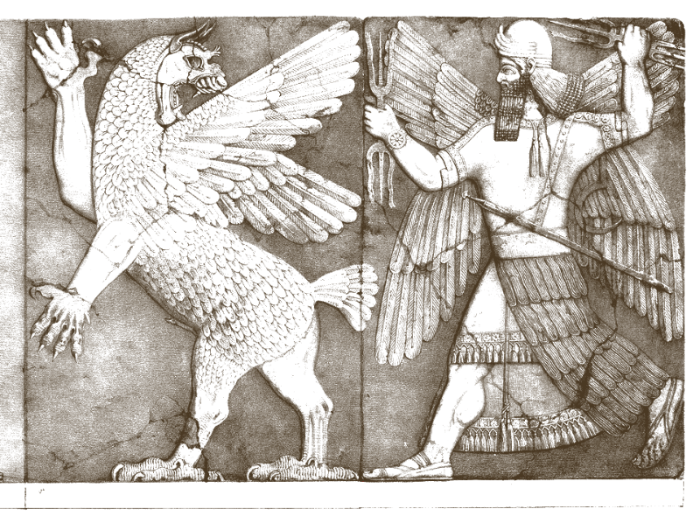
Anu had high authority in Mesopotamian traditions while existing within a pantheon.3 Marduk’s elevation in Enuma Elish likewise involves the recognition and participation of other divine beings.4 These examples show why supremacy and exclusive monotheism cannot be treated as identical.
Exclusive monotheism denies or fundamentally reinterprets the independent divine status of other gods. A hierarchy places one deity above others while still acknowledging them. A text’s praise of one deity may also reflect a local or ritual perspective rather than a universal doctrinal statement.
Echoes of History can argue that such hierarchies preserve a trace of an underlying Creator. But the historical description should remain a hierarchy unless a source supports a stronger claim.

Egypt’s creator traditions make the comparison richer
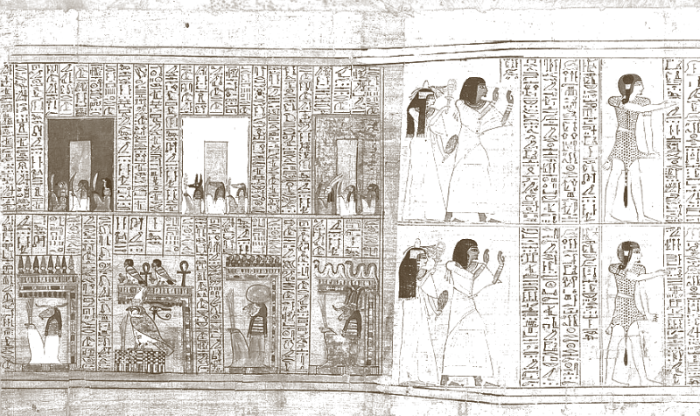
Atum and Ptah occupy important creator roles in different Egyptian traditions.1,5 The accounts vary in how they describe divine generation, thought, speech and the emergence of order.1 Their similarities and differences both belong in the comparison.
The existence of creator language is significant because it shows that ancient religious thought was not limited to a collection of disconnected nature spirits. Yet creator figures could coexist with a wider divine world.1 That coexistence is part of the evidence, not an inconvenience to remove.
The book’s hypothesis becomes more serious when it explains why a proposed original unity would have produced different divine genealogies and ritual systems. Naming the unity is not the same as explaining the transformations.
What recurring themes actually establish
Across the sources discussed in these articles, creation can be linked with ordering a primordial condition, giving humanity a purpose and establishing divine authority.1,6,4 Those are genuine points of comparison. They support an inquiry into recurring concerns about origin and meaning.
They do not identify one unique explanation for the recurrence. Shared human experiences, historical contact, inherited motifs and the book’s proposed divine memory may all be considered. The challenge is deciding which explanation fits a particular similarity and what additional evidence distinguishes them.
For example, two traditions using clay imagery may share a meaningful motif. That alone does not specify whether one borrowed from the other, both inherited an older tradition or each developed the image independently.
The book’s proposed sacred memory
Echoes of History interprets ancient wisdom through a Creator-centered spiritual framework. It asks whether gods, monuments and scriptures may contain partial or transformed echoes of divine teaching. This is more specific than the simple observation that people in many cultures asked religious questions.
Stated positively and clearly, the idea is this: ancient plurality may, in the author’s interpretation, conceal memories of an ultimate source. It should then state the limit: surviving evidence does not demonstrate a complete chain from one original revelation to every later pantheon.
That qualification does not erase the thesis. It identifies the kind of thesis being offered. A theological argument can be meaningful without pretending to be an excavation report.

What competing explanations offer
One explanation emphasizes cultural transmission. Stories, names and symbols can change as communities interact. Another emphasizes common concerns: death, authority, fertility, danger and the need to explain an ordered world. A third treats religious recurrence as evidence of a relationship with an actual divine reality.
These are frameworks for interpretation rather than answers established by one artifact. A fair comparison asks what each would need to show. Transmission needs plausible contact and specific correspondences; independent development needs to explain similarities without assuming them away; divine-memory interpretation needs to address why differences are so substantial.
Readers should not be forced into the choice “all religions are identical” or “every resemblance is meaningless.” Similarity can be real while its explanation remains disputed.
What the differences tell us
Enuma Elish narrates divine conflict and Marduk’s victory, while Genesis 1 presents creation through God’s speech without the same narrated battle against an equal primordial opponent.4,7 Egyptian traditions offer still different structures.1 Those distinctions concern the nature of divinity and creation, not merely local names.
If a proposed continuity requires those differences to be ignored, it is not explaining the evidence adequately. A stronger argument asks whether traditions preserve, reinterpret or reject particular ideas.
This is where Echoes of History’s essence can be communicated most clearly. The book is not merely matching names; it is asking whether human religious history points beyond its fragments. That philosophical move should be made visible rather than disguised as a settled historical identity.

Can archaeology prove one Creator?
Archaeology can identify sites, sequences, artifacts and material practices. Written sources can reveal what a community said about divine beings. Neither method automatically establishes the ultimate reality behind those claims.
Göbekli Tepe illustrates the limit especially well. Its special architecture and ritual interpretation support discussion of early shared symbolic life, but no readable creed from the site identifies a particular Creator.8,9 The theological conclusion cannot simply be extracted from the pillars.
This does not mean archaeology is irrelevant to spiritual reflection. It can deepen the question and constrain inaccurate historical claims. What it cannot do is eliminate the need for philosophical and theological reasoning.
How to evaluate the book’s proposal fairly
Begin by identifying the exact claim. Is the author proposing historical descent from one tradition, an underlying divine reality, or a philosophical interpretation of recurring ideas? Those versions require different arguments.
Then examine one comparison in detail. Read the relevant text, establish its setting and describe the similarity precisely. Ask whether important differences are acknowledged and whether the explanation depends on an uncertain date.
Finally, avoid treating uncertainty as proof. An unexplained feature can make a question interesting; it does not automatically favor the Creator-memory hypothesis over every alternative. The thesis should be argued through its explanatory merits, not through gaps alone.
A clear statement of the idea
There may be one Creator behind humanity’s religious diversity in a theological sense, and Echoes of History explores that possibility. History alone does not establish that all ancient gods were simply the same deity under different names. Egyptian and Mesopotamian evidence preserves both recurring themes and major differences.1,3,4
The most defensible framing is therefore an invitation: explore whether ancient traditions contain traces of a deeper unity, while allowing the sources to remain distinct. That expresses the book’s essence without turning its interpretation into a falsely settled fact.
What is fact and what is theory
| Claim | Status | Basis |
|---|---|---|
| Egyptian and Mesopotamian religions had supreme and creator gods | ESTABLISHED | Texts on Atum, Ptah, Anu and Marduk |
| Those gods belonged to plural pantheons | ESTABLISHED | Same textual sources |
| All religions began as one original monotheism | DEBATED THEORY | Primordial-monotheism theory, contested |
| Ancient diversity preserves a memory of one Creator | THE BOOK’S VIEW | The central argument of Echoes of History |
What the book argues · the author’s view
Read Echoes of History for the full Creator-centered interpretation. The articles provide a research-grounded path into that argument without asking the reader to treat a hypothesis as an archaeological conclusion.

From the author of this guide
Explore this question in Echoes of History
Echoes of History sets out the full case for one Creator behind humanity’s many gods.
Frequently asked questions
Did ancient religions worship one supreme god?
Many had a supreme or creator god, but usually alongside other gods. A highest god is not the same as an only God.
What is primordial monotheism?
The theory, associated with Wilhelm Schmidt, that humanity’s earliest religion was belief in one high God. It remains contested among historians of religion.
Can archaeology prove one Creator?
No. Archaeology can show what people built and wrote; whether one Creator stands behind those traditions is a philosophical and theological question.
Further reading and resources
Book links in this list are affiliate links to Amazon and Bookshop.org. As an Amazon Associate, Jossef Salman earns from qualifying purchases, at no extra cost to you.
- Religion in Ancient Mesopotamia — Jean Bottéro (2001)Read to understand a religious world in its own terms before comparing it with monotheism.Amazon · Bookshop.orgScholarly
- Egyptian Myth: A Very Short Introduction — Geraldine Pinch (2004)A companion for the plurality and structure of Egyptian traditions.Amazon · Bookshop.orgIntroduction
- Echoes of History — Jossef Salman (2nd ed. 2026)Ancient religion, scripture and cosmology read as pointing to one Creator, with evidence and belief labelled.The author’s book
Sources
- UCL Digital Egypt for Universities, Creation myths
- Metropolitan Museum of Art, Mesopotamian Deities
- ORACC, Ancient Mesopotamian Gods and Goddesses, An/Anu
- Oxford Classical Dictionary, Enūma Eliš
- British Museum, Shabaka Stone, collection EA498
- Oxford Electronic Text Corpus of Sumerian Literature, Enki and Ninmah, translation
- Sefaria, Genesis 1, text and translation
- UNESCO World Heritage Centre, Göbekli Tepe
- German Archaeological Institute, Göbekli Tepe research project
