Quick answer
Sumer in southern Mesopotamia is the strongest conventional answer. By the fourth millennium BCE, Uruk had grown into a city with temples, administration and the earliest writing. Egypt developed its own state soon after. Older sites such as Göbekli Tepe and Çatalhöyük show complex communities, but not cities with states and writing.
How to read this page
- Established: observed, measured, excavated or written in a source from the time. The only things we present as fact.
- Mainstream theory: what most specialists currently conclude. Reported accurately, not endorsed.
- Alternative or debated theory: proposals outside or at the edge of mainstream scholarship, or still disputed. Reported so you can see the debate.
- The book’s view: the argument of Echoes of History, always labelled as the author’s own.
Sumer is a strong answer, but the definition matters
Sumer in southern Mesopotamia is one of the strongest conventional answers when “civilization” means an early urban society with complex institutions and writing. Uruk was a major center of this transformation during the fourth millennium BCE; the Metropolitan Museum describes its exceptional growth and central role in the development of urban life.1 Earlier settlements and monumental sites existed, but an old inhabited place is not automatically a city-state.
The word “civilization” can also carry assumptions that need to be removed. It should not mean that everyone outside cities was primitive, unintelligent or without moral and spiritual life. It is more useful as a description of particular forms of social organization than as a ranking of human worth.
Echoes of History places Mesopotamia within a larger account of humanity, sacred knowledge and the renewal of civilization. To make that account clear, this guide distinguishes the book’s scriptural framework from the archaeological criteria used to describe early cities.
For a broader overview of this subject, see our First Civilizations guide.
Why Uruk is central to the answer
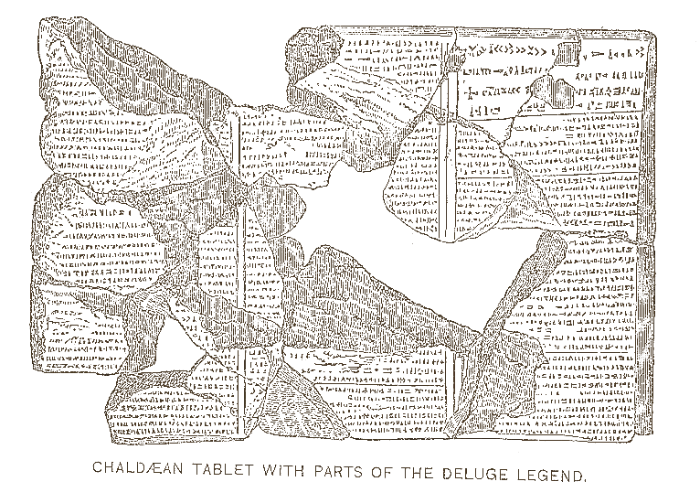
During the fourth millennium BCE, Uruk developed into an exceptionally large settlement with major institutional and architectural centers.1 The Metropolitan Museum links this growth to changes in economic organization, specialized activity and emerging administrative practices.1 This is the kind of connected evidence that makes it important for the civilization question.
Urbanization is not established by one spectacular building. The stronger case comes from a pattern: population concentration, institutions, production, exchange and records operating together. Mesopotamia’s cities and states are discussed in that wider context by OpenStax’s historical survey.2
These developments did not necessarily happen everywhere at once or in a perfectly fixed order. Writing could develop through administrative needs rather than appear as a complete literary culture on its first day. Cities, institutions and record keeping formed through historical processes, not a single moment of invention.

Was writing the beginning of civilization?
Writing is crucial because it changes both social organization and what later historians can know. Early Mesopotamian record keeping is associated with administration and economic activity before the expansive literary and religious traditions familiar from later periods.1,2 That does not mean religion began only when it was written down.
A written name of a god establishes that the name was recorded by a certain period. It does not necessarily establish when people first believed in that deity. Likewise, a religious composition preserved in a later copy may contain older traditions without allowing every detail to be dated to the beginning of the city.
The book’s interest in older sacred memory can therefore be discussed without claiming that a late manuscript directly records prehistoric events. The distinction between the date of a copy, the formation of a composition and the events it narrates is essential.
What about Egypt?
Egypt also belongs among the earliest major civilizations, but its development must be understood through its own regional evidence and chronology. UCL’s chronology places the emergence of the dynastic state around the end of the fourth millennium BCE, followed by the Old Kingdom and its great pyramid-building period.3 Egypt did not need to be a copy of Sumer to share features such as kingship, institutions and writing.
The Metropolitan Museum’s Old Kingdom account connects royal government, religious ideology and major building programs within a distinctly Egyptian setting.4 Comparing Egypt and Mesopotamia is therefore useful; collapsing them into one undifferentiated “first civilization” is not.
The phrase “civilizations before Egypt” should also be handled carefully. Some forms of urban development in Mesopotamia preceded Egypt’s unified dynastic state, while Egyptian communities already possessed their own long regional history.1,3,5 A chronological comparison is not a proof of cultural inferiority or a simple line of dependence.
Why Göbekli Tepe is not the same kind of answer
Göbekli Tepe is much earlier than Uruk and Egypt’s dynastic state, with monumental structures belonging to the Pre-Pottery Neolithic.6,1,3 The German Archaeological Institute describes it as a settlement with a strong ritual dimension, not as an excavated Sumerian-style city-state.7 Its age does not make it the earliest urban civilization under the same definition.
This distinction allows the site to matter without forcing it into the wrong category. It offers major evidence for communal construction and symbolic activity before cities.6 The lesson is that the capacities contributing to later civilization existed in other forms before the urban pattern became established.
Çatalhöyük offers another comparison: a large Neolithic settlement with rich architecture and imagery, but not simply a miniature Uruk.8 Different sites answer different questions about settlement, social complexity and cities.

Did Mesopotamian people believe civilization came from heaven?
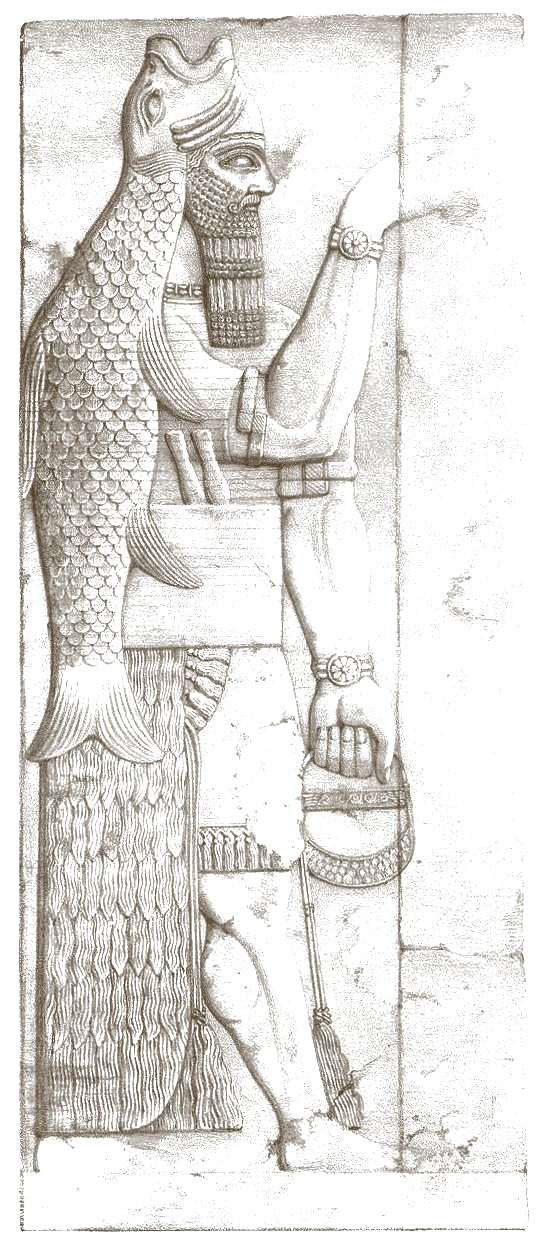
The Sumerian King List famously opens with kingship descending from heaven, and its narrative organizes rule among successive cities.9 This tells us something important about how kingship could be represented as divinely authorized. It does not give a straightforward archaeological chronology of every city or ruler.
The text also contains extraordinary reign lengths and a flood dividing parts of its narrative.9 Treating all of this as a modern chronological table would disregard its literary and ideological character. Ancient texts can preserve historical material and theological interpretation within the same composition.
Echoes of History connects civilization with sacred teaching and scriptural history. The King List is relevant because it shows an ancient tradition placing authority within a divine order. It cannot independently confirm every step of the book’s broader account of a post-flood renewal of civilization.
What “first” can and cannot tell us
The earliest surviving evidence identifies a threshold in the record, not necessarily an absolute beginning. Excavation coverage, preservation and definitions influence which society receives the label. “One of the earliest clearly documented urban civilizations” is often more precise than a universal claim of firstness.
Sumer remains a strong answer because its cities, institutions and writing supply a compelling combined case.1,2 Yet a serious explanation should also acknowledge earlier communities and the distinct development of Egypt.6,8,3 That gives readers a history of change instead of a trivia answer detached from context.
For Echoes of History, the deeper question is not merely which civilization appeared first. It is how human knowledge, sacred authority and organized society relate. Archaeology helps establish the sequence and settings; the book offers a spiritual interpretation of their significance.
What is fact and what is theory
| Claim | Status | Basis |
|---|---|---|
| Uruk grew into a major city in the 4th millennium BCE | ESTABLISHED | Metropolitan Museum of Art; excavation |
| Writing first appears in Mesopotamia c. 3400–3200 BCE | ESTABLISHED | Proto-cuneiform tablets from Uruk |
| Sumer was the first civilization | MAINSTREAM THEORY | Depends on defining civilization as urban, literate statehood |
| Civilization began with divine instruction | THE BOOK’S VIEW | The author’s interpretation in Echoes of History |
What the book argues · the author’s view
Echoes of History examines early civilization through its proposed relationship with sacred wisdom. Read that interpretation alongside the archaeological chronology rather than using one to replace the other.

From the author of this guide
Explore this question in Echoes of History
Echoes of History reads the first civilizations alongside scripture and sacred memory.
Frequently asked questions
Which came first, Egypt or Sumer?
Sumerian cities such as Uruk developed urban institutions and writing slightly earlier, in the fourth millennium BCE; Egypt unified as a state around 3100 BCE.
What makes a society a civilization?
Historians usually look for cities, specialised labour, social hierarchy, monumental building, organised religion and often writing.
Is Göbekli Tepe the first civilization?
It is much older but lacks cities, states and writing, so it answers a different question about early monumental communities.
Further reading and resources
Book links in this list are affiliate links to Amazon and Bookshop.org. As an Amazon Associate, Jossef Salman earns from qualifying purchases, at no extra cost to you.
- Religion in Ancient Mesopotamia — Jean Bottéro (2001)Read for the religious world of the societies that developed early urban institutions.Amazon · Bookshop.orgScholarly
- Abydos: Egypt’s First Pharaohs and the Cult of Osiris — David O’Connor (2009)A useful Egyptian counterpart concerning early kingship and sacred place.AmazonArchaeology
- Echoes of History — Jossef Salman (2nd ed. 2026)Ancient religion, scripture and cosmology read as pointing to one Creator, with evidence and belief labelled.The author’s book
Sources
- Metropolitan Museum of Art, Uruk: The First City
- OpenStax, World History Volume 1, Ancient Mesopotamia
- UCL Digital Egypt for Universities, Chronology
- Metropolitan Museum of Art, Egypt in the Old Kingdom
- UCL Digital Egypt for Universities, Predynastic burial customs
- UNESCO World Heritage Centre, Göbekli Tepe
- German Archaeological Institute, Göbekli Tepe research project
- UNESCO World Heritage Centre, Neolithic Site of Çatalhöyük
- Oxford Electronic Text Corpus of Sumerian Literature, Sumerian King List, translation
