
Quick answer
Before cities and writing, people left clear evidence of practices, not creeds: careful burials, symbolic objects, animal imagery and communal ritual spaces such as Göbekli Tepe. These show concern with death, community and meaning. Whether people understood those meanings as relationships with a Creator, ancestors or spirits usually cannot be securely determined.
How to read this page
- Established: observed, measured, excavated or written in a source from the time. The only things we present as fact.
- Mainstream theory: what most specialists currently conclude. Reported accurately, not endorsed.
- Alternative or debated theory: proposals outside or at the edge of mainstream scholarship, or still disputed. Reported so you can see the debate.
- The book’s view: the argument of Echoes of History, always labelled as the author’s own.
We can see practices more clearly than doctrines
Before cities and writing, people left evidence of meaningful treatment of the dead, symbolic objects and communal spaces, but not a surviving universal creed. Qafzeh’s ancient burials and Göbekli Tepe’s monumental buildings show how different kinds of material evidence support discussion of preurban symbolic life.1,2 They cannot tell us that every community held the same beliefs about gods, creation or the afterlife.
The question therefore requires both imagination and restraint. We need enough imagination to recognize that people without cities could possess rich inner and social lives. We need enough restraint not to place a later theology into an earlier grave or carved figure simply because the resemblance feels meaningful.
Echoes of History offers a spiritually oriented account of early humanity, connecting civilization with sacred teaching and memory. This article treats that account as the book’s interpretation while asking what the material evidence itself allows us to recover.
For a broader overview of this subject, see our Origins of Religion hub.
What “before cities” actually means
A city is not merely a place where people live close together. The emergence of urban life in Mesopotamia involved concentrated settlement, institutions, specialized activity and relationships extending beyond an individual household.3,4 Communities could be settled, technically skilled and symbolically elaborate without meeting every feature of that later urban pattern.
Çatalhöyük makes the distinction especially useful. UNESCO describes a large Neolithic settlement with closely packed houses, wall paintings, reliefs and other evidence of an extensive social and cultural world, principally dating from 7400 to 6200 BCE on its eastern mound.5 Its significance does not depend on calling it a Sumerian-style city.
Likewise, Göbekli Tepe’s special architecture predates the urban world represented by Uruk.2,3 “Before cities” should therefore not mean “before complex thought,” “before cooperation” or “before spiritual concern.” Those assumptions would make the archaeological evidence harder, not easier, to understand.

The dead as a source of clues
Intentional burial offers some of the deepest evidence for meaningful human action before urbanization. At Qafzeh, the association between human remains and ochre has been interpreted as suggesting ritual use.1 The Tinshemet study adds evidence for Middle Paleolithic burial and symbolic practices in a broadly comparable early period.6
The questions behind those acts remain open. Did people imagine the dead continuing in another realm? Did they maintain a relationship with them? Were burial practices primarily expressions of care, memory, obligation or belonging? Archaeological context may favor particular answers, but it cannot simply reproduce the thoughts of the participants.
The useful conclusion is that death already mattered socially and symbolically. A much stronger conclusion, such as “these people believed in the exact afterlife described in later scripture,” needs evidence that the burial itself does not provide.
Sacred activity may have belonged to everyday space
UNESCO’s account of Çatalhöyük highlights the cultural importance of its houses and their decoration.5 The German Archaeological Institute’s revised understanding of Göbekli Tepe similarly combines settlement evidence with a pronounced ritual component.7 These cases challenge a neat division between a secular home and a separate religious building.
Modern readers often expect religion to reside in a distinct institution: a temple, church, mosque or priesthood. That expectation can mislead us when studying communities whose meaningful practices were organized differently. A household could be a setting for remembrance, symbolic display and obligations involving the dead without resembling a later temple.
This does not mean that every decorated house was a sanctuary. The point is methodological: sacred activity should not be ruled out because a setting is domestic, and a special function should not be imposed merely because decoration is striking.
What animals and human-like figures might mean
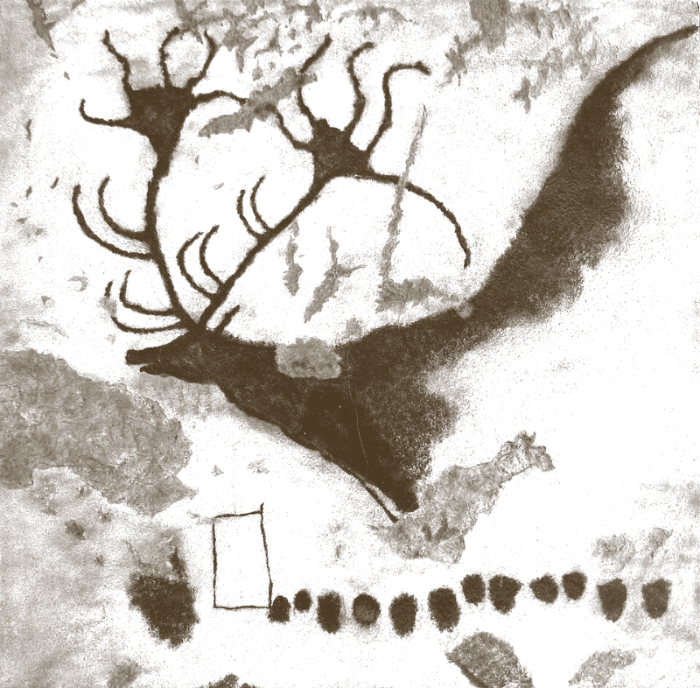
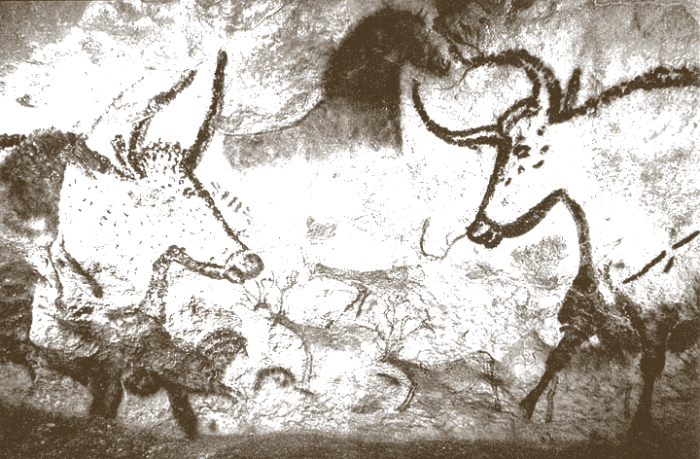
Göbekli Tepe includes animal reliefs and anthropomorphic details on its pillars.2 Such imagery gives scholars evidence of a developed symbolic vocabulary, but its meanings are not fully recoverable from the carvings alone.
An animal can be food, danger, a group emblem, a story character or a being understood spiritually. A human-like figure may represent a person, ancestor or supernatural presence. Without written explanations, assigning one meaning to every image risks treating an interpretation as if it were a translation.
This is particularly important for the book’s comparative approach. A later culture’s sacred bull does not automatically tell us what an earlier bull image meant. The similarity may deserve investigation; a claim of direct continuity requires an additional argument about time, contact and transmission.


Were early people already monotheists?
The surviving evidence from the sites discussed here does not supply a readable statement that only one God existed. At Göbekli Tepe, scholarly discussion is based on material remains rather than a preserved creed naming a supreme Creator.2,7 It would be equally unwarranted to conclude that no one could have believed in such a Creator.
The archaeological position is limited knowledge, not a theological verdict. There is a difference between “we cannot demonstrate this belief here” and “this belief did not exist.” Preserving that difference allows spiritual interpretation without turning an absence of evidence into a proof.
Echoes of History proposes that humanity may have received sacred knowledge before the civilizations accessible through writing. That claim belongs to the book’s theological framework. The evidence for preurban ritual demonstrates antiquity and complexity of practice; it does not independently identify the proposed revelation or its recipients.
Did these beliefs help people cooperate?
Göbekli Tepe’s construction reflects substantial collective organization.2 Çatalhöyük’s dense built environment and rich cultural evidence likewise show communities whose social relationships were more elaborate than a simple image of isolated prehistoric families suggests.5 Shared meanings may have contributed to how people lived together.
However, the fact that a ritual coincides with cooperation does not tell us that ritual was the sole cause of cooperation. Kinship, practical need, resources, mutual advantage and authority may all matter. The question should remain open to several interacting explanations rather than be answered by a single story of religion creating society.
The distinction is especially useful when reading the book. Divine teaching is the book’s interpretation of early wisdom; social coordination is one observable implication of major shared construction. They belong to different explanatory levels.
What can we say with confidence?
People before cities were not without meaningful practices, symbolic expression or shared obligations. The cited burials, settlement evidence and monumental architecture show several ways those concerns entered the material record.1,5,2 The exact doctrines behind them remain much less accessible.
The best answer is therefore a careful reconstruction rather than a complete imaginary religion. Early people attended to death, formed communities and expressed meaning through objects and places.1,5,2 Whether those meanings were understood as relationships with a Creator, ancestors, spirits or differently conceived powers often cannot be securely determined.
Echoes of History gives that uncertainty a spiritual direction by asking whether ancient expressions of meaning preserve sacred memory. Readers can explore the proposal without overlooking how much must still be inferred.
What is fact and what is theory
| Claim | Status | Basis |
|---|---|---|
| Prehistoric people buried their dead deliberately | ESTABLISHED | Qafzeh and other excavated burials |
| Ritual activity took place in everyday and communal spaces | MAINSTREAM THEORY | Settlement and Göbekli Tepe evidence |
| Early people shared one universal creed | DEBATED THEORY | No surviving evidence supports a uniform belief |
| Prehistoric meaning may preserve sacred memory of a Creator | THE BOOK’S VIEW | The author’s interpretation in Echoes of History |
What the book argues · the author’s view
Read Echoes of History for its broader account of sacred wisdom before and within civilization. Keep the distinction between that account and the more fragmentary material record as part of the inquiry.

From the author of this guide
Explore this question in Echoes of History
Echoes of History explores what sacred memory may lie behind humanity’s earliest rituals.
Frequently asked questions
Did prehistoric people believe in God?
The material record shows ritual and symbolic behaviour, but it rarely reveals whether people believed in one god, many gods, ancestors or spirits.
Were early humans monotheists?
Some theologians have argued so, but archaeology cannot confirm a single original monotheism from burials and images alone.
What is the best evidence for prehistoric religion?
Deliberate burials with grave goods or pigment, repeated symbolic imagery and specially built communal spaces are the strongest clues.
Further reading and resources
Book links in this list are affiliate links to Amazon and Bookshop.org. As an Amazon Associate, Jossef Salman earns from qualifying purchases, at no extra cost to you.
- Göbekli Tepe: A Stone Age Sanctuary in South-Eastern Anatolia — Klaus Schmidt (2012)Explore an early interpretation of preurban monumental symbolism, then compare newer excavation findings.AmazonArchaeology
- Religion in Ancient Mesopotamia — Jean Bottéro (2001)Useful for understanding how the evidence changes once written religious sources become available.Amazon · Bookshop.orgScholarly
- Echoes of History — Jossef Salman (2nd ed. 2026)Ancient religion, scripture and cosmology read as pointing to one Creator, with evidence and belief labelled.The author’s book
Sources
- Smithsonian Human Origins Program, Qafzeh: Oldest Intentional Burial
- UNESCO World Heritage Centre, Göbekli Tepe
- Metropolitan Museum of Art, Uruk: The First City
- OpenStax, World History Volume 1, Ancient Mesopotamia
- UNESCO World Heritage Centre, Neolithic Site of Çatalhöyük
- Nature Human Behaviour, Evidence from Tinshemet Cave, 2025
- German Archaeological Institute, Göbekli Tepe research project
