On a granite boulder on Sehel Island, just south of Aswan, there is an inscription carved in the Ptolemaic period. In it King Djoser is in distress because the Nile has failed to flood for seven years. Grain has run out, and the king turns to his wise official, Imhotep, to find out why.
Seven failed harvests, a worried king and a wise adviser who knows what to do: anyone raised on Genesis knows the story of Joseph in Egypt. So which pharaoh ruled in his time? The Bible never names him. Most scholars who think there is history behind the story place Joseph in Egypt somewhere between about 1900 and 1600 BC, often in the Hyksos era, and many others treat Genesis 37 to 50 as a literary novella that cannot be pinned to any reign. In Echoes of History I give a different answer. Joseph was Imhotep, vizier of King Djoser of the Third Dynasty, and he lived around 2660 BC.
In this article
- What does the Bible say about Joseph in Egypt?
- Which pharaoh do scholars connect with Joseph?
- Was Joseph Imhotep? The case I make in Echoes of History
- How many Israelites came to Egypt with Joseph?
- Imhotep or Not? The Book and the Biblical Scholar
What does the Bible say about Joseph in Egypt?
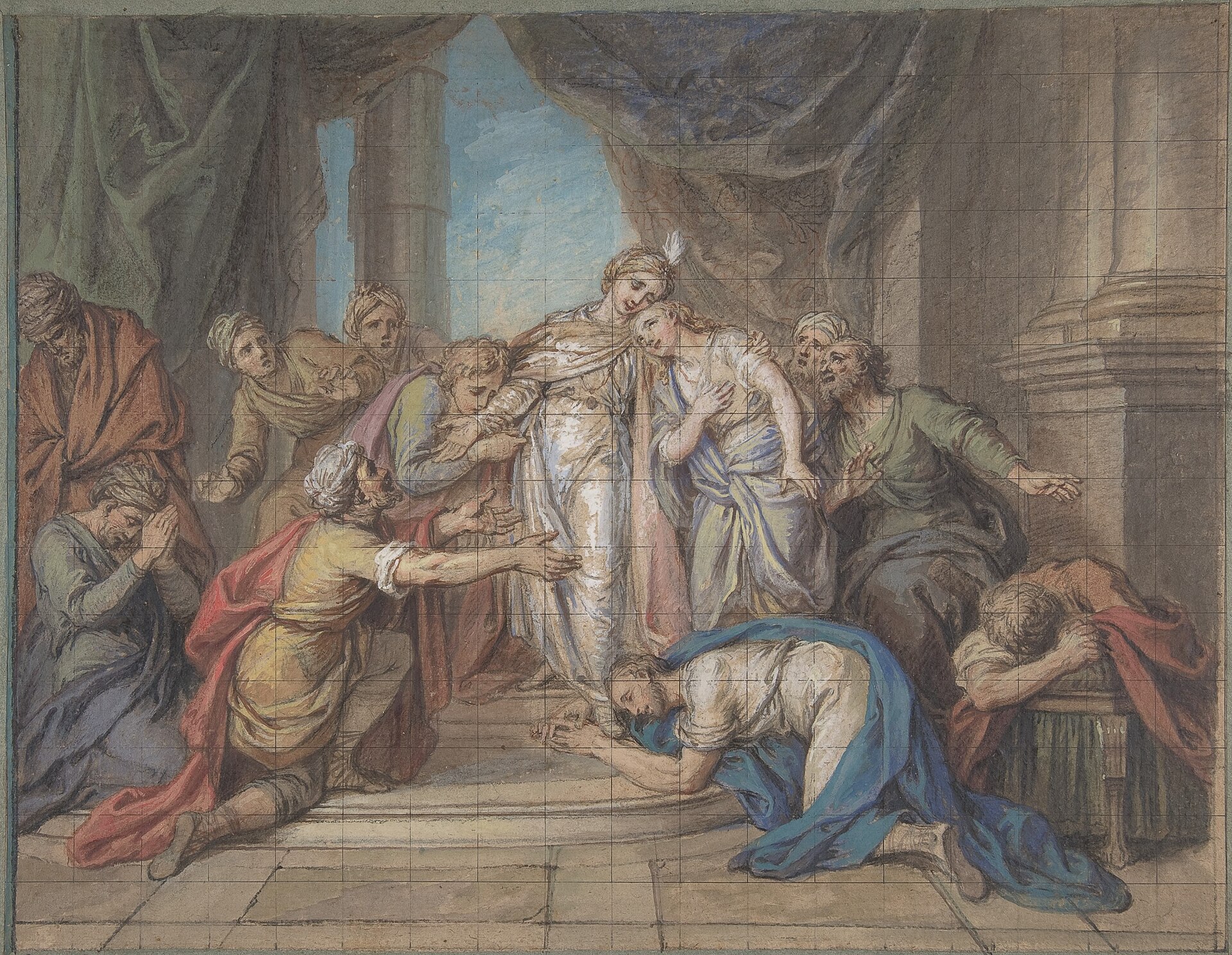
Genesis tells it in long, careful scenes. Joseph, the favoured son of Jacob, is sold by his brothers to traders and taken down to Egypt. He serves in the house of Potiphar, is falsely accused by Potiphar’s wife, and ends up in prison, where he interprets the dreams of two of the king’s servants. When Pharaoh dreams of seven fat cows eaten by seven thin ones, Joseph explains it: seven years of plenty, then seven of famine. He is put in charge of the land and stores grain for the bad years.

Pharaoh gives him an Egyptian name, Zaphenath-paneah, and a wife, Asenath, daughter of Potiphera, priest of On, the city the Greeks called Heliopolis (Genesis 41:45). Jacob’s family follows, and they settle in the land of Goshen, good grazing country for shepherds. The ruler is called Pharaoh throughout and is never given a personal name.
Which pharaoh do scholars connect with Joseph?
There is no Egyptian record that mentions Joseph, so every answer is an inference. The oldest popular theory comes from Josephus, the first-century Jewish historian, who linked the Israelites in Egypt with the Hyksos, the West Asian rulers of the northern Delta around 1650 to 1550 BC. A Semitic vizier, the argument goes, would have been most welcome under Semitic kings.
Conservative scholars such as Kenneth Kitchen, in On the Reliability of the Old Testament (2003), argue that details of the story suit the early second millennium BC: for example, Joseph’s price of twenty shekels of silver matches slave prices attested for that period. On the other side, Donald Redford’s A Study of the Biblical Story of Joseph (1970) argued that the Egyptian names in the story are of types that became common much later, around the seventh to fifth centuries BC, and that the tale was composed then. Many other biblical scholars read the story as a crafted court tale whose historical core, if any, is out of reach.
What almost nobody in that debate does is look a thousand years earlier.
Was Joseph Imhotep? The case I make in Echoes of History
My case starts from the famine. Imhotep was the vizier of Djoser and the man credited with the Step Pyramid at Saqqara and the great complex around it. In his time, I argue, the seven-year drought of the Bible took place, and the buildings of the Djoser complex included granaries to store food for the famine.

The Sehel inscription, known today as the Famine Stele, is the second piece. It dates from the Ptolemaic period (305 to 30 BC) and speaks of a seven-year famine under Djoser and Imhotep. It credits Imhotep with ending the famine and records a dream in which a god of the Nile speaks to the king. In the book I put it plainly: this matches the story in the Bible.
Then there is the man’s reputation. Imhotep was remembered for engineering, for medicine and as a scribe of the gods, which in my reading means a prophet. About 1500 years after his death the Egyptians came to regard him as a new incarnation of Thoth, and later still they worshipped him, which is how I believe many Egyptian gods began: as wise men raised to divine status after their death. I call him the second pyramid builder after Enoch, and the link between the pyramid and prophetic wisdom intrigues me.
I also point to the names. “Joseph” and “Djoser” sound alike, and I raise the possibility that Joseph was Djoser himself, serving as vizier rather than king, with “Imhotep” a title meaning “the one who comes in peace”, a fitting name for a man who came from another land. As the book says, “Based on the evidence, Imhotep appears to align with the prophet Joseph of the Israelites.”
What the Qur’an adds to the story of Joseph
Reading Surah Yusuf (Qur’an 12) gave me two clues that Genesis does not. First, the Qur’an never calls Joseph’s ruler Pharaoh. He is simply “the king”. In the story of Moses the ruler is Pharaoh, a name that carries tyranny and disbelief. The king of Joseph’s time, I argue, believed in God and did not deserve it.
Second, the man who buys Joseph is called al-Azeez, “the noble one”, a rank like a vizier, and Joseph later rises to that same position himself.
The surah also shows Egypt divided in religion. When the women of the city see Joseph they cry out “Perfect is Allah! This is no man” (12:31), the speech of believers. In prison Joseph asks his two companions whether “separate gods” are better “or Allah, the One” (12:39), which shows that polytheism was common too. Monotheists and polytheists lived side by side in Joseph’s Egypt.
How many Israelites came to Egypt with Joseph?
The Bible says only about seventy-five came down with Jacob. I think the first group was small, perhaps a hundred people with women, children and servants, and that more Canaanites followed and settled in northern Egypt from around 2600 BC to about 1860 BC. A wall painting in the tomb of Khnumhotep II at Beni Hasan, from the Twelfth Dynasty around 1900 BC, shows a group of West Asian visitors with their animals and goods arriving before an Egyptian official. To me it shows what Israelites coming to Egypt would have looked like, and it fits my timeline.
That timeline also solves a problem Genesis creates. A family of seventy cannot become a people large enough to frighten a pharaoh in two or three hundred years. In the book I argue that at least 800 years, and more likely around a thousand, separate Joseph from Moses. With Joseph under Djoser around 2650 BC and the Exodus around 1807 BC, the Israelites stayed in Egypt for roughly 835 years.
Imhotep or Not? The Book and the Biblical Scholar
The Book: A seven-year famine, a king troubled by a dream, a wise official who saves Egypt. The Famine Stele tells the Joseph story with Egyptian names on it.

The Biblical Scholar: It tells a famine story, and it was carved about 2,400 years after Djoser. Most Egyptologists read it as a document of the Ptolemaic priests of Khnum on Elephantine, setting their temple’s claims to land and income back in a famous reign. And the god in Djoser’s dream is Khnum, lord of the cataract region, not a nameless god of the Nile.
The Book: Whatever the priests wanted from it, the stele still remembers a seven-year famine under Djoser and still credits Imhotep with ending it. Those are the details that matter. And what is carved in stone is more reliable than what is written on paper.
The Biblical Scholar: Then look at what was carved in Djoser’s own time. His monuments call him Netjerikhet. “Djoser” turns up in later sources. The sound-alike with Joseph, Yosef in Hebrew, rests on a name the king may not have used in his lifetime.
The Book: I offer the names as a possibility, not the foundation. The foundation is the man: an outsider of great wisdom, an engineer and healer, remembered as a scribe of the gods, who saved Egypt from famine and was later made a god. Which other figure in Egyptian history fits Joseph that well?
The Biblical Scholar: I’ll grant you one odd echo. A statue base of Djoser found at Saqqara lists Imhotep’s titles, and one of them is high priest of Heliopolis. Genesis marries Joseph to the daughter of a priest of On, which is Heliopolis. That is a real coincidence.
The Book: It is more than a coincidence when it sits next to the famine and the granaries.
The Biblical Scholar: Your Qur’an point cuts both ways, though. Egyptians only began calling the king himself “pharaoh”, from per-aa, “great house”, in the New Kingdom. That supports an early Joseph, but it would also put Moses after about 1500 BC, which you reject.
The Book: The Qur’an is describing two kinds of ruler, not two periods of royal titles. One king believed in God and honoured a prophet. The other was a tyrant. That is why only one is called Pharaoh.
The Biblical Scholar: And Genesis 15:13 gives four hundred years of oppression, Exodus 12:40 gives 430. You need more than double that.
The Book: Because seventy people do not become a nation in four centuries. I take the core of the Bible as true and the numbers as human. Joseph came to Egypt in Djoser’s reign, and the people he brought had eight centuries to grow before Moses led them out.
FAQ
Which pharaoh was ruling when Joseph was in Egypt?
The Bible does not name him. Scholars who accept a historical Joseph usually suggest a ruler of the Middle Kingdom or the Hyksos period, roughly 1900 to 1600 BC. In Echoes of History I argue the king was Djoser of the Third Dynasty, around 2660 BC, and that Joseph served him as the vizier remembered as Imhotep.
Was Imhotep the biblical Joseph?
That is my position in Echoes of History. Imhotep was Djoser’s vizier and architect, and a much later inscription credits him with ending a seven-year famine. Mainstream Egyptologists see Imhotep as an Egyptian official, attested by name on a statue base of Djoser, and do not identify him with Joseph. No ancient source makes the link directly.
What is the Famine Stele?
The Famine Stele is an inscription carved on a granite boulder on Sehel Island near Aswan during the Ptolemaic period. It describes a seven-year famine in the reign of Djoser, ended through Imhotep’s counsel and a royal dream of the god Khnum. Many scholars read it as a priestly text supporting temple claims.
Why does the Qur’an call Joseph’s ruler “king” and not Pharaoh?
Surah Yusuf calls him al-malik, the king, while the Moses story calls the ruler Pharaoh. I read this as a moral difference: Joseph’s king believed in God, while Moses’ Pharaoh was a tyrant. Others note that “pharaoh” became a title for the king only in the New Kingdom.
Sources
- Genesis 37 to 50; Qur’an, Surah Yusuf (12)
- Donald B. Redford, A Study of the Biblical Story of Joseph (Brill, 1970)
- Kenneth A. Kitchen, On the Reliability of the Old Testament (Eerdmans, 2003)
- Miriam Lichtheim, Ancient Egyptian Literature, Volume III, for a translation of the Famine Stela
Keep Reading
- Who Was the Pharaoh of the Exodus?
- Who Was Abraham? The Father of Three Religions
- Who Built the Pyramids of Giza?
- Who Was Enoch? Idris, Hermes and Thoth as One Man
The chapter on Joseph, Moses and the Exodus in Echoes of History follows the Israelites from Djoser’s court to the night they left Egypt. If the Imhotep question interests you, that is where the full argument lives.
Go deeper: explore our full guide in this topic hub, read a free sample, or get the complete argument in Echoes of History.